
Monday, May 19, 2014
Rethinking 42 with Cambodia's Channe Suy Lan, Innovation Leader
This interview was conducted by Mitty Steele, and originally posted on Banyan Blog. I am reproducing it here (with Mitty's permission), because it is a great interview with an inspiring leader, to which I am very lucky to be married :)

Sunday, January 27, 2013
Rethinking 42 with Ilham Hasan of Somaliland, first woman to be elected, who almost made it
I met Ilham Hasan on my recent trip to Hargeisa, Somaliland. I met her at Shaqodoon, an NGO, where she and her team are focused on harnessing the power of the Internet to develop the job market for the youth in the Somalia and Somaliland. Prior to Shaqodoon she was a presenter on television. However, the reason for this interview is to catch up with her after she ran for office as a representative of the city of Hargeisa, in Somaliland's Local Council. The Local Council, in Somaliland's complex political system, is one of the three layers of representative bodies, along with the Parliament and the Council of Elders. Not a bad career track record for a 25 year old Somali woman.

Friday, October 26, 2012
Rethinking 42 with Roya Mahboob - Afghanistan's first female tech-entrepreneur
I first met Roya Mahboob when I visited Afghanistan over a year ago. She left a strong impression on me as a young, energetic and optimistic entrepreneur, in a country not known in particular for female entrepreneurship. Today, I circled back to her to hear about her experiences.


Thursday, September 6, 2012
Rethinking 42 with Nin: A failed Lao monk turns top filmmaker
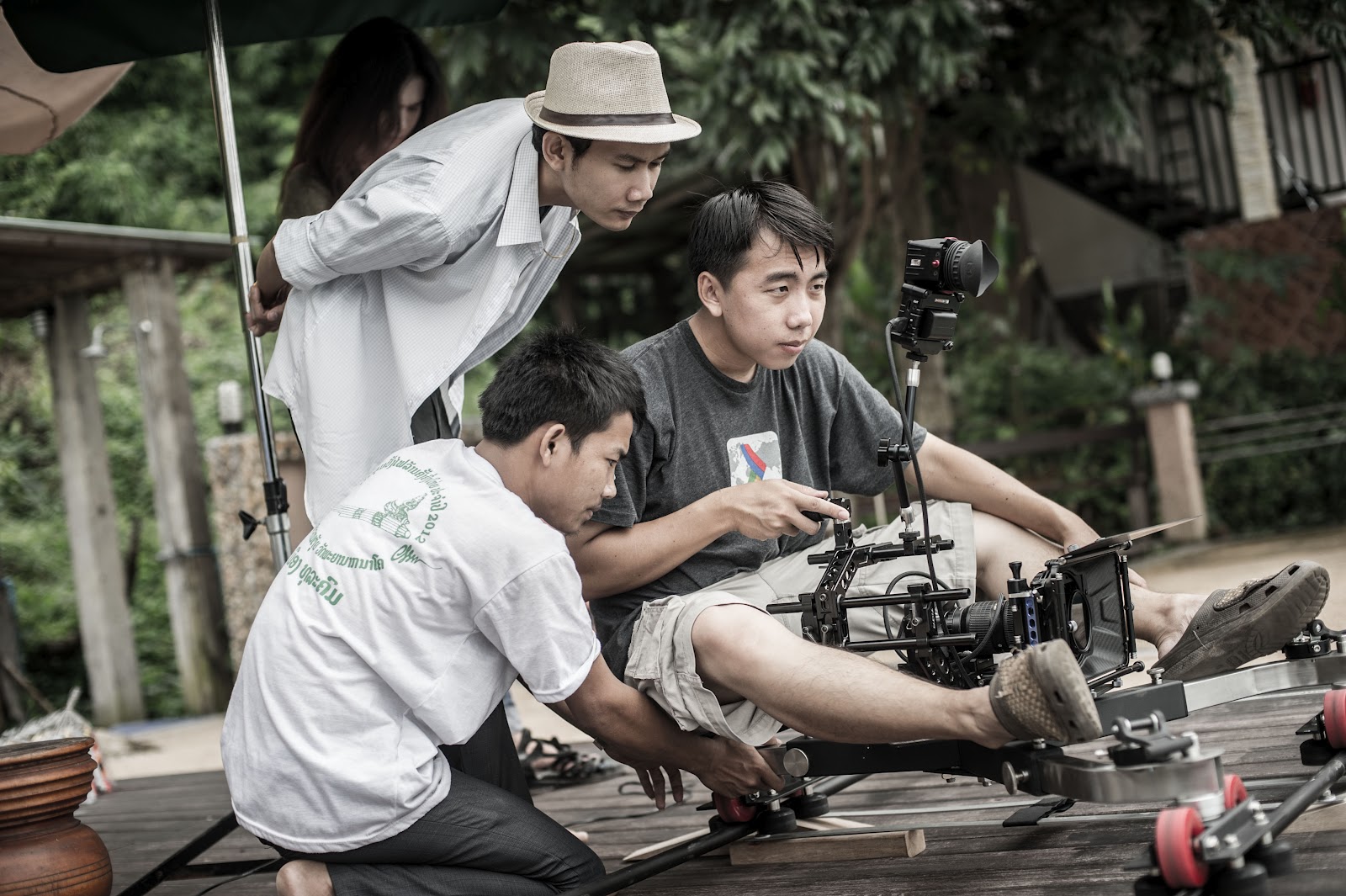
Sunday, July 22, 2012
Rethinking 42 with Anan Bouapha, Laos gay leader
(some of the sections of this interview containing more personal questions were removed on Monday 23/7 9am Laos time, per Anan's request. The original interview text was approved by Anan prior to publishing, but he had second thoughts after seeing it live, which is totally legitimate dl)
Anan Bouapha is the unofficial recognized leader of the LGBT (Lesbian, Gay, Bi-sexual, Transgender) community in the Asian country of Laos, who recently organized the country's first ever Pride event, hosted at the US embassy. Anan is involved in a million and one activities around LGBT empowerment and HIV prevention. I sat down with him for a chat on the answer to life, the universe and everything. Our meeting was appropriately set to 11pm at Pack Luck, a gay-friendly bar in Vientiane. On a Thursday night, the bar was empty except for us - myself, being in the midst of a self-imposed no-alcohol month, sipping mineral water and Anan drinking coke. I wonder how this bar stays in business.

Anan Bouapha is the unofficial recognized leader of the LGBT (Lesbian, Gay, Bi-sexual, Transgender) community in the Asian country of Laos, who recently organized the country's first ever Pride event, hosted at the US embassy. Anan is involved in a million and one activities around LGBT empowerment and HIV prevention. I sat down with him for a chat on the answer to life, the universe and everything. Our meeting was appropriately set to 11pm at Pack Luck, a gay-friendly bar in Vientiane. On a Thursday night, the bar was empty except for us - myself, being in the midst of a self-imposed no-alcohol month, sipping mineral water and Anan drinking coke. I wonder how this bar stays in business.

Friday, June 29, 2012
Revealing my Exotometer
"Where are you coming from?" "I am flying in from Laos". The security person at Istanbul airport stares down at me with a look that almost makes me want to confess that I am a terrorist: "there is no such country" he asserts. I reply softly, "Sir, I can assure you there is a country like that. It is next to Thailand".
Tuesday, June 26, 2012
Life and Death of Written Languages
First: a quiz: how many "primary written languages" are there in the world? By "primary written languages" I don't mean languages that merely have an orthography (writing system) developed in academia - I mean languages which are truly written in the real world - in other words, languages which their native speakers (or other nationals of their respective countries) use as their language of choice for reading and writing. Examples: English, Amharic, Bahasa Indonesia, Japanese. Examples of languages that are widely used verbally, but their native speakers do not use them as their primary language for writing: Swiss Deutsch, Hausa, Balinese, Zulu.
Monday, June 25, 2012
On the Perceived Directionality of the World
In the past few months I have been fortunate to be able to visit some places in which Salafi Islam has a strong following - countries like Somalia, Afghanistan and the Kashmir valley in India. It was when I was sitting in a tea shop having strong Somali tea and chatting with some Somali elders on a quiet Friday morning in Hargeisa, that it suddenly occurred to me.
Subscribe to:
Posts (Atom)